Accessible Housing
2026-01-21
American Community Survey (ACS)
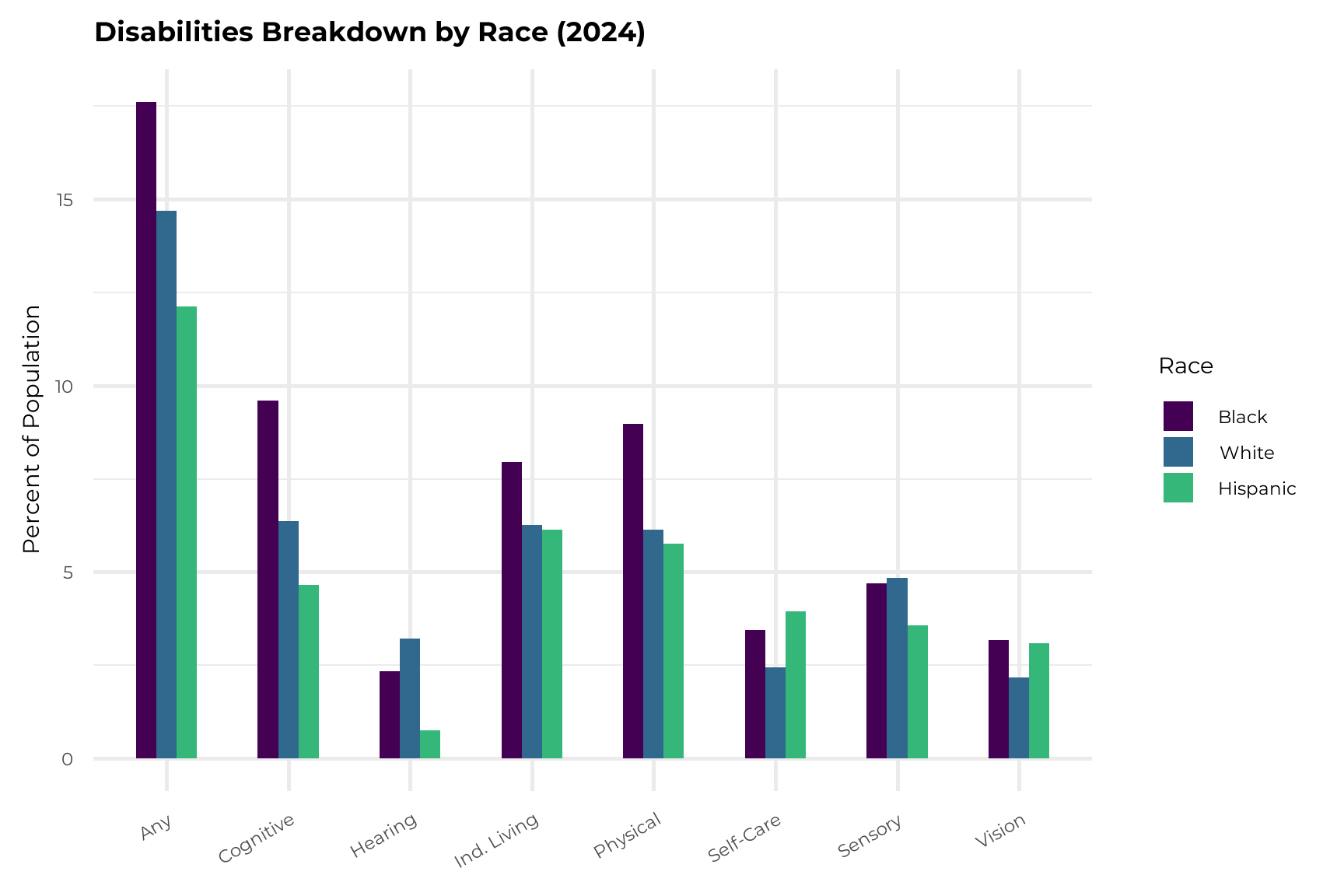
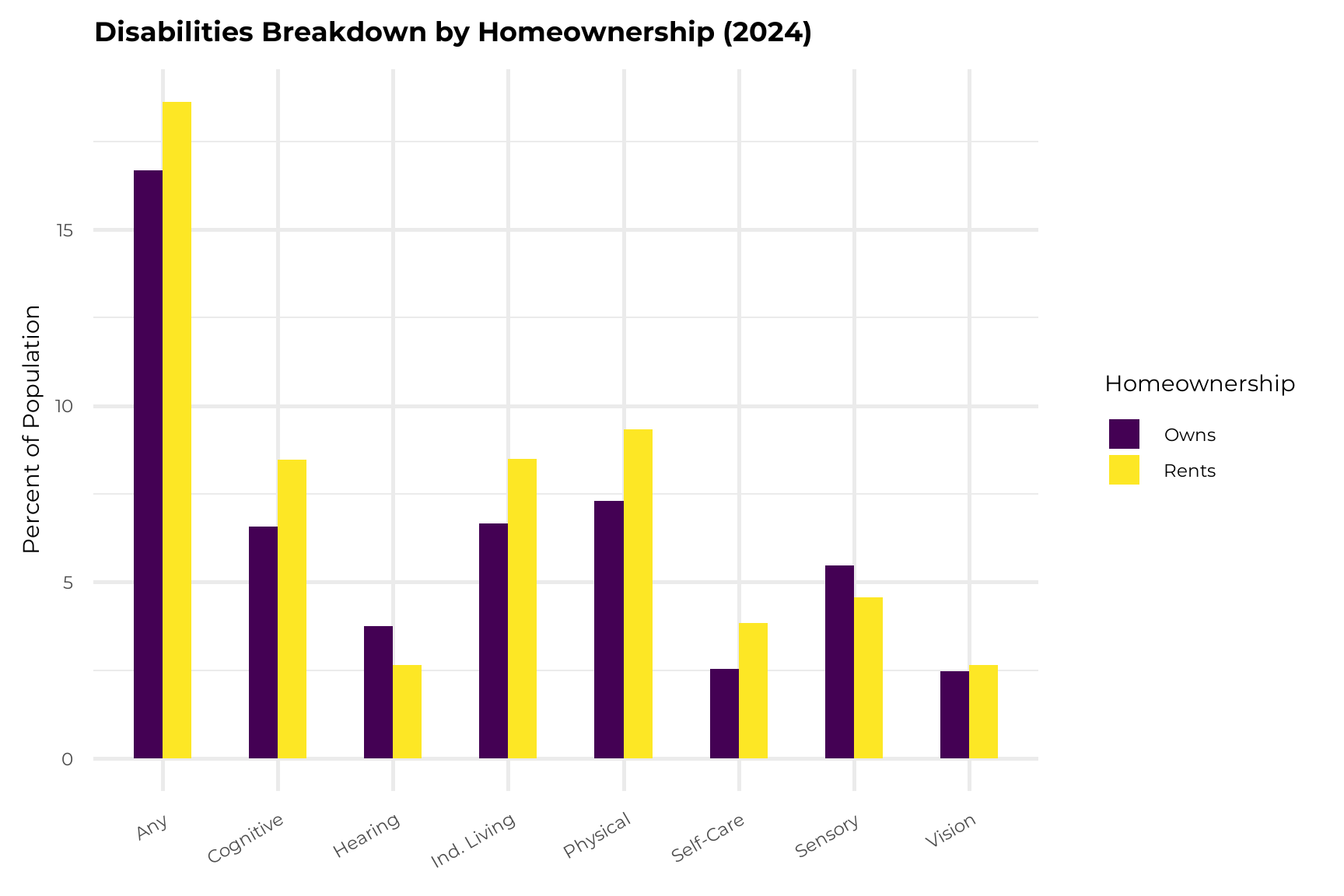
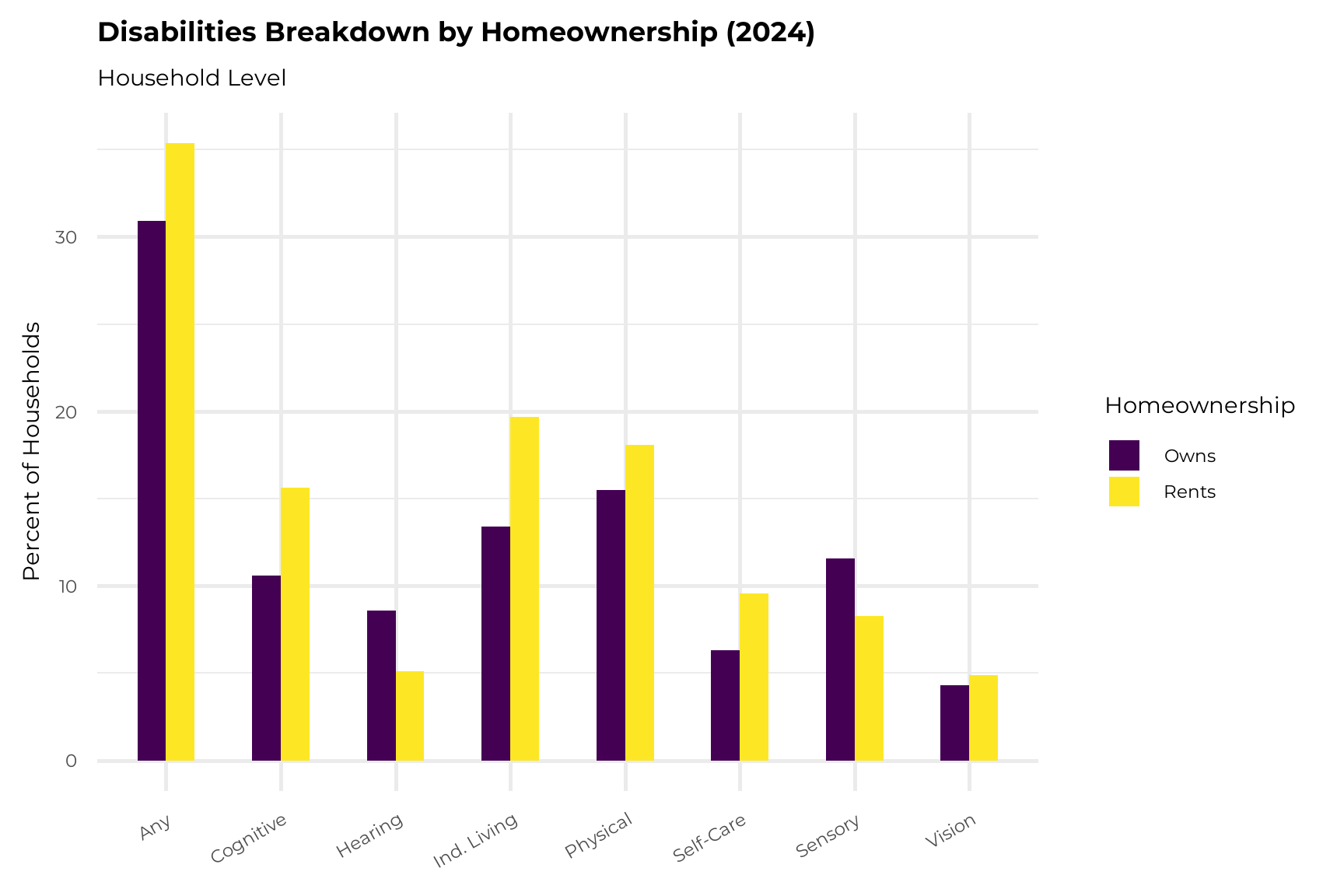
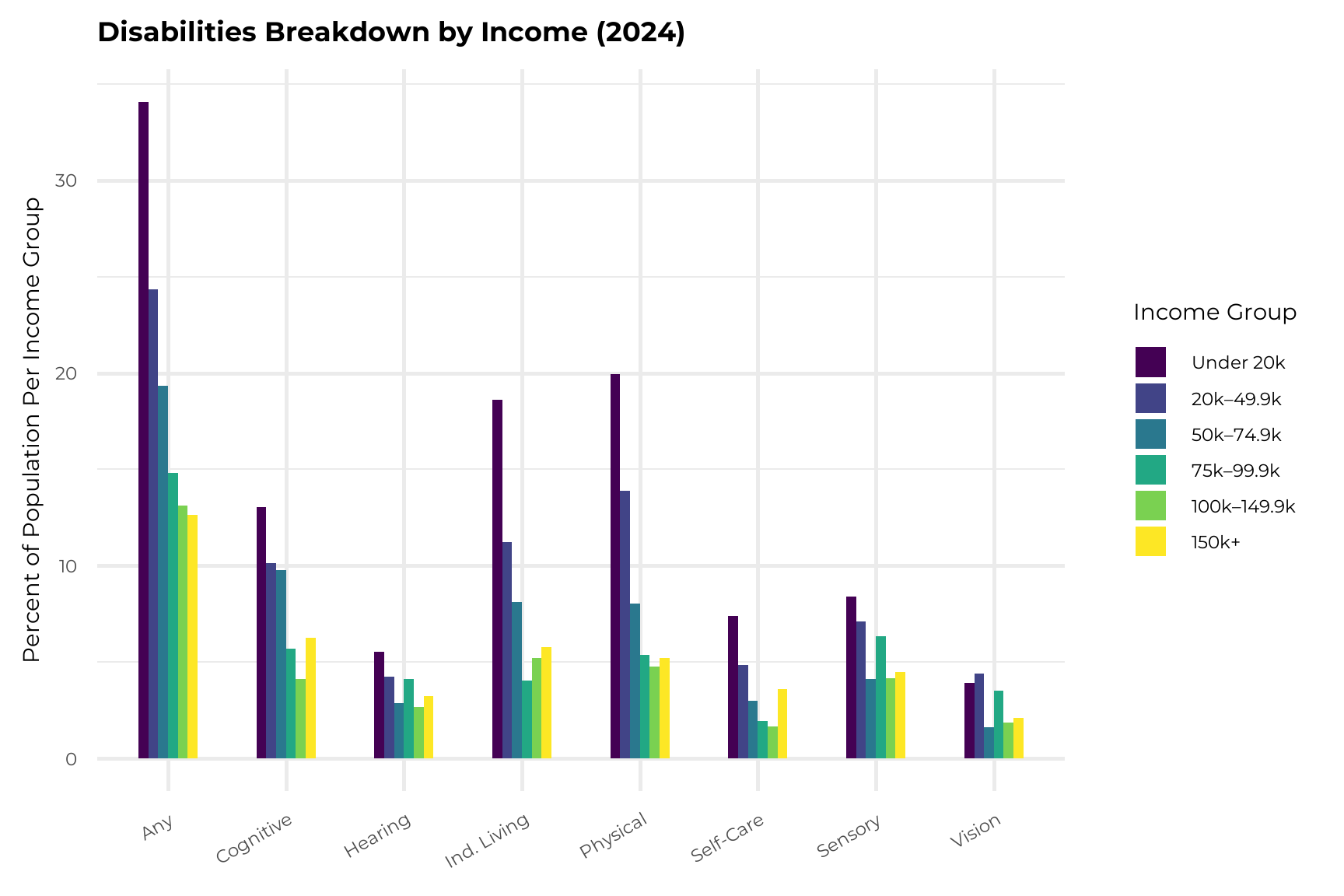
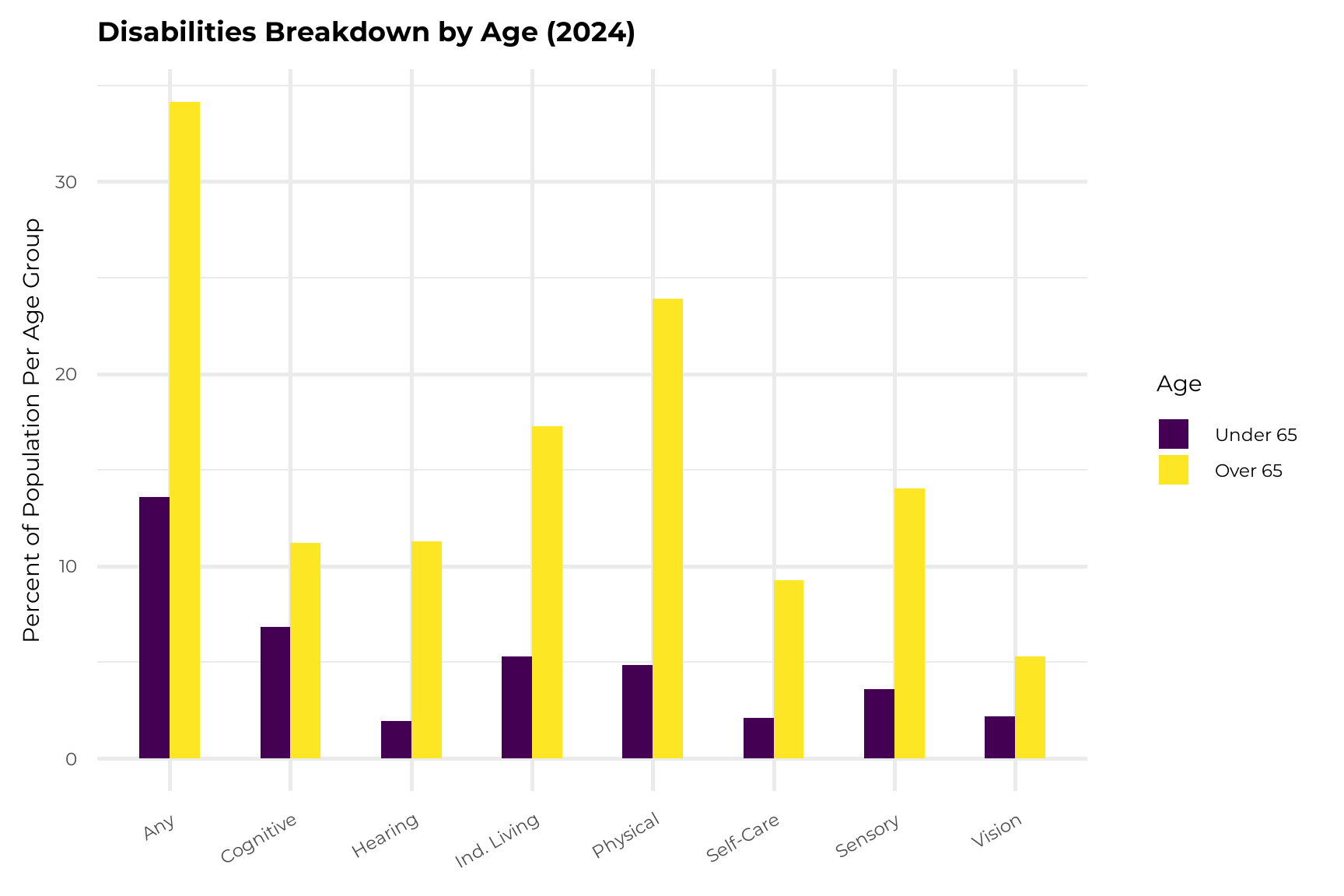
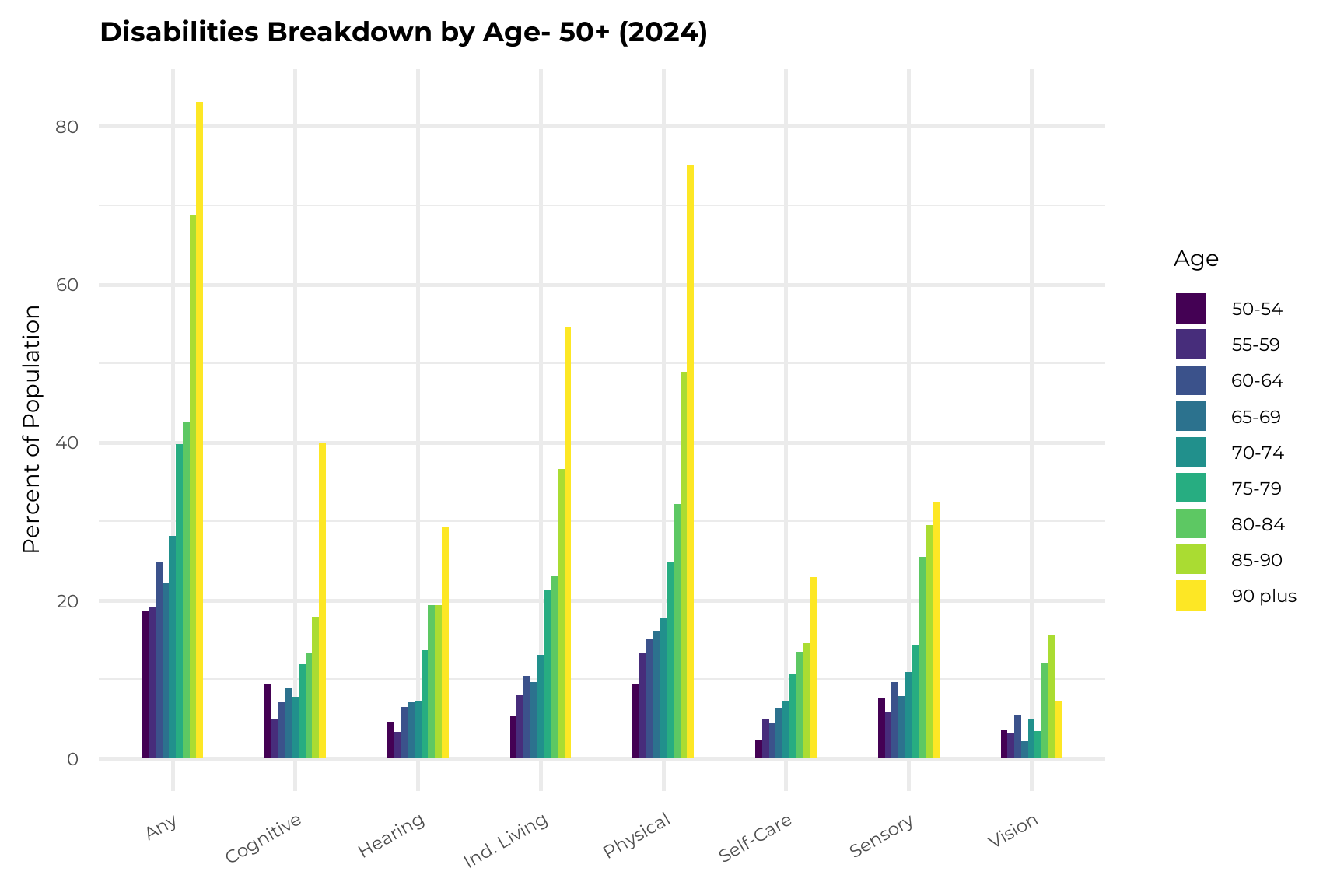
The following section summarizes findings from ACS data on disability prevalence in Louisville, KY, highlighting how factors like race, sex, income, and age relate to disability rates.
See variable definitions
| Variable | Description |
|---|---|
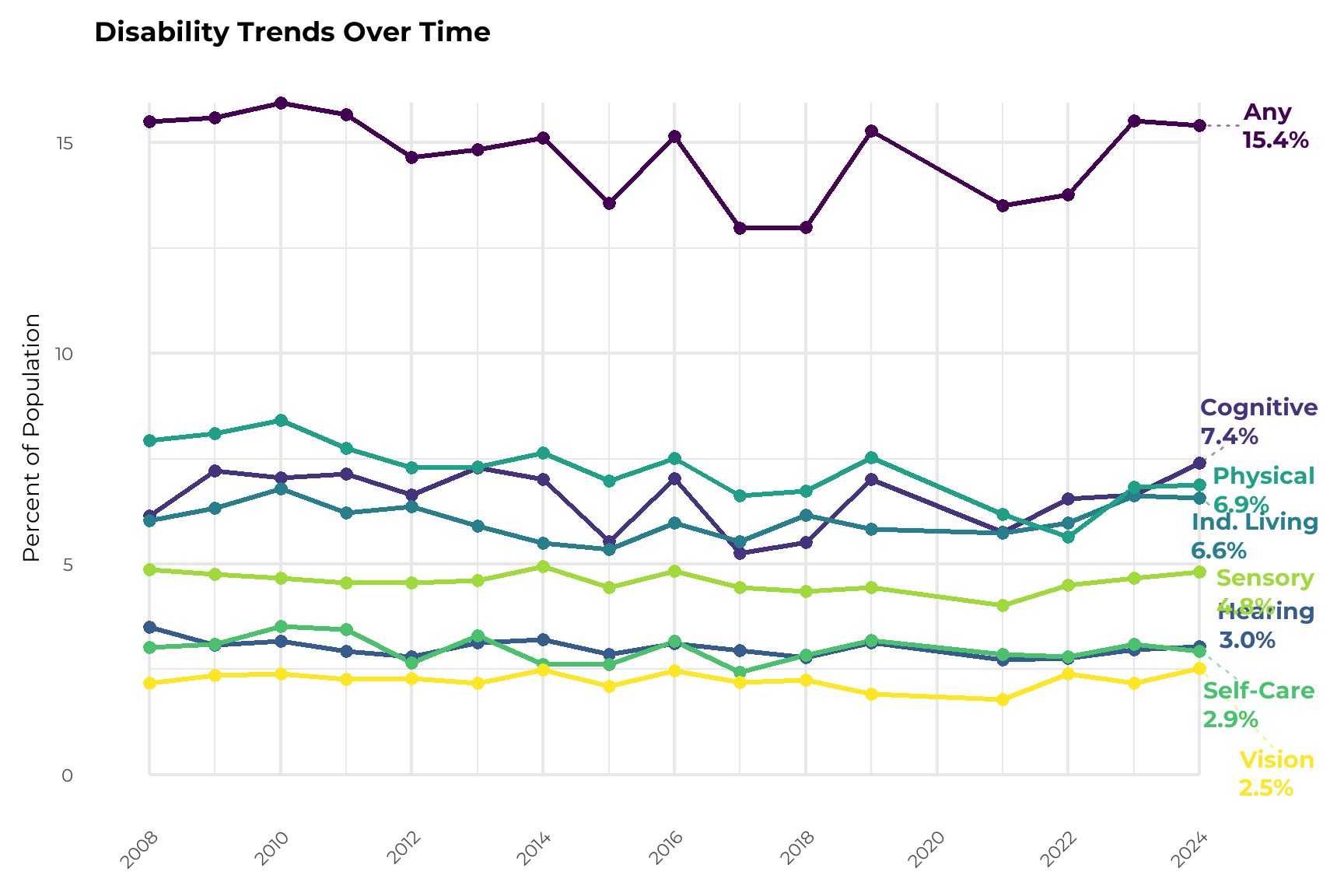
| Ambulatory difficulty | DIFFPHYS- Indicates whether the respondent has a condition that substantially limits one or more basic physical activities, such as walking, climbing stairs, reaching, lifting, or carrying. |
| Independent living difficulty | DIFFMOB- Indicates whether the respondent has any physical, mental, or emotional condition lasting six months or more that makes it difficult or impossible to perform basic activities outside the home alone. Does not include temporary health problems. |
| Self-care difficulty | DIFFCARE- Indicates whether respondents have any physical or mental health condition that has lasted at least six months and makes it difficult to take care of their own personal needs (bathing, dressing, getting around inside the home). Excludes temporary conditions. |
| Vision difficulty | DIFFEYE- Indicates whether the respondent is blind or has serious difficulty seeing even with corrective lenses. |
| Hearing difficulty | DIFFHEAR- Indicates whether the respondent is deaf or has serious difficulty hearing. |
| Cognitive difficulty | DIFFREM- Indicates whether the respondent has cognitive difficulties (such as learning, remembering, concentrating, or making decisions) because of a physical, mental, or emotional condition. |
Trends Across Demographics (2024)
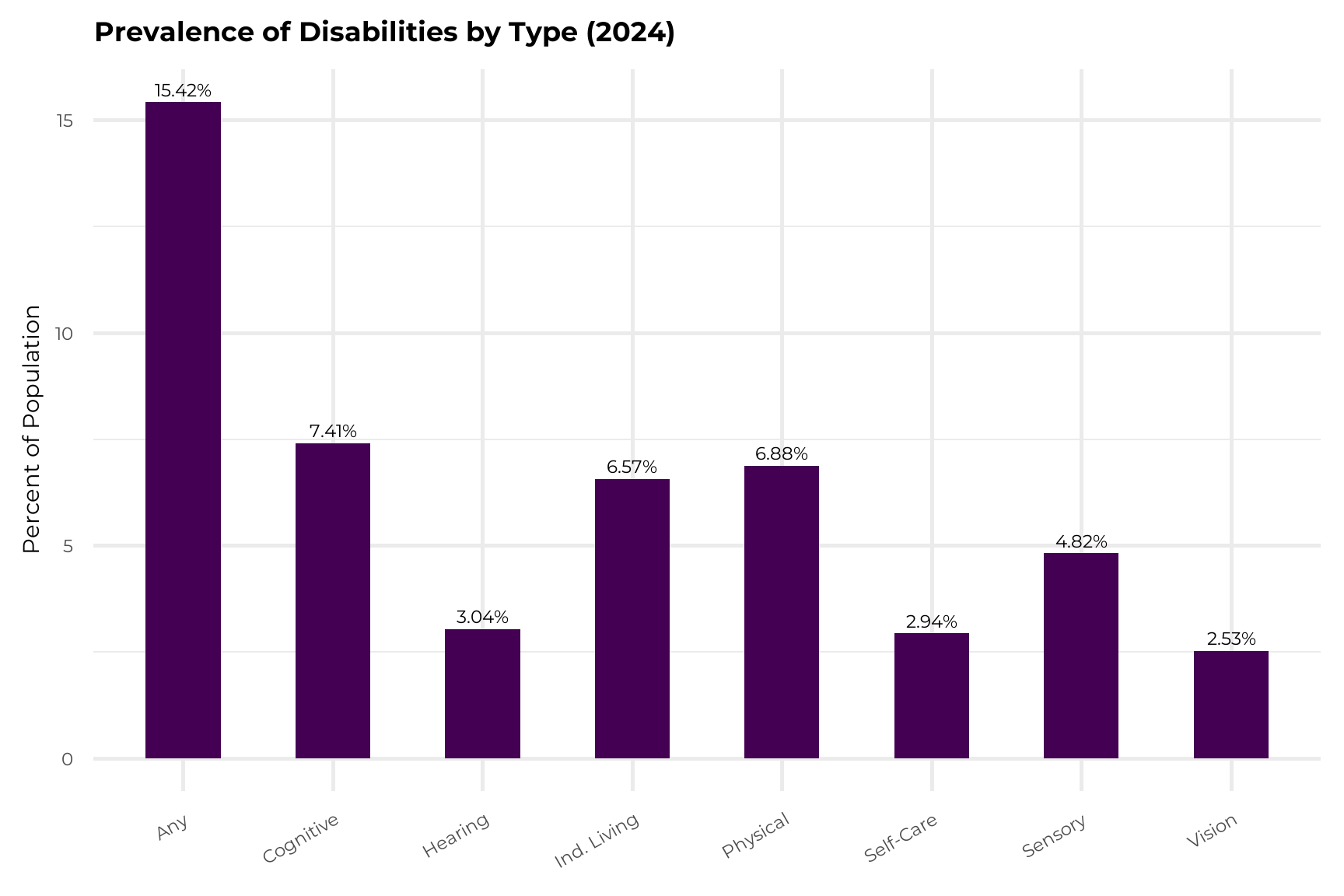
Overall
Individual
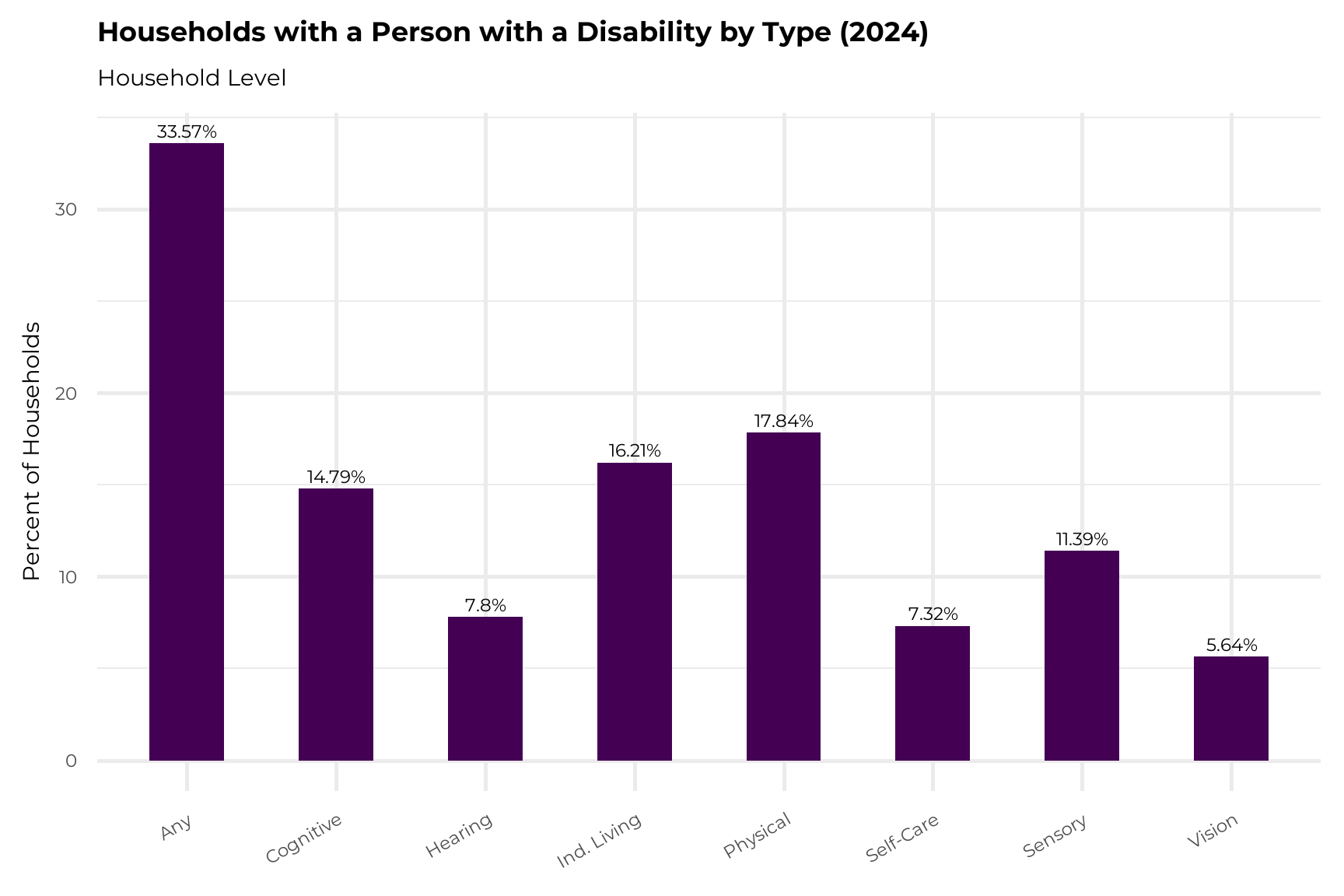
Household
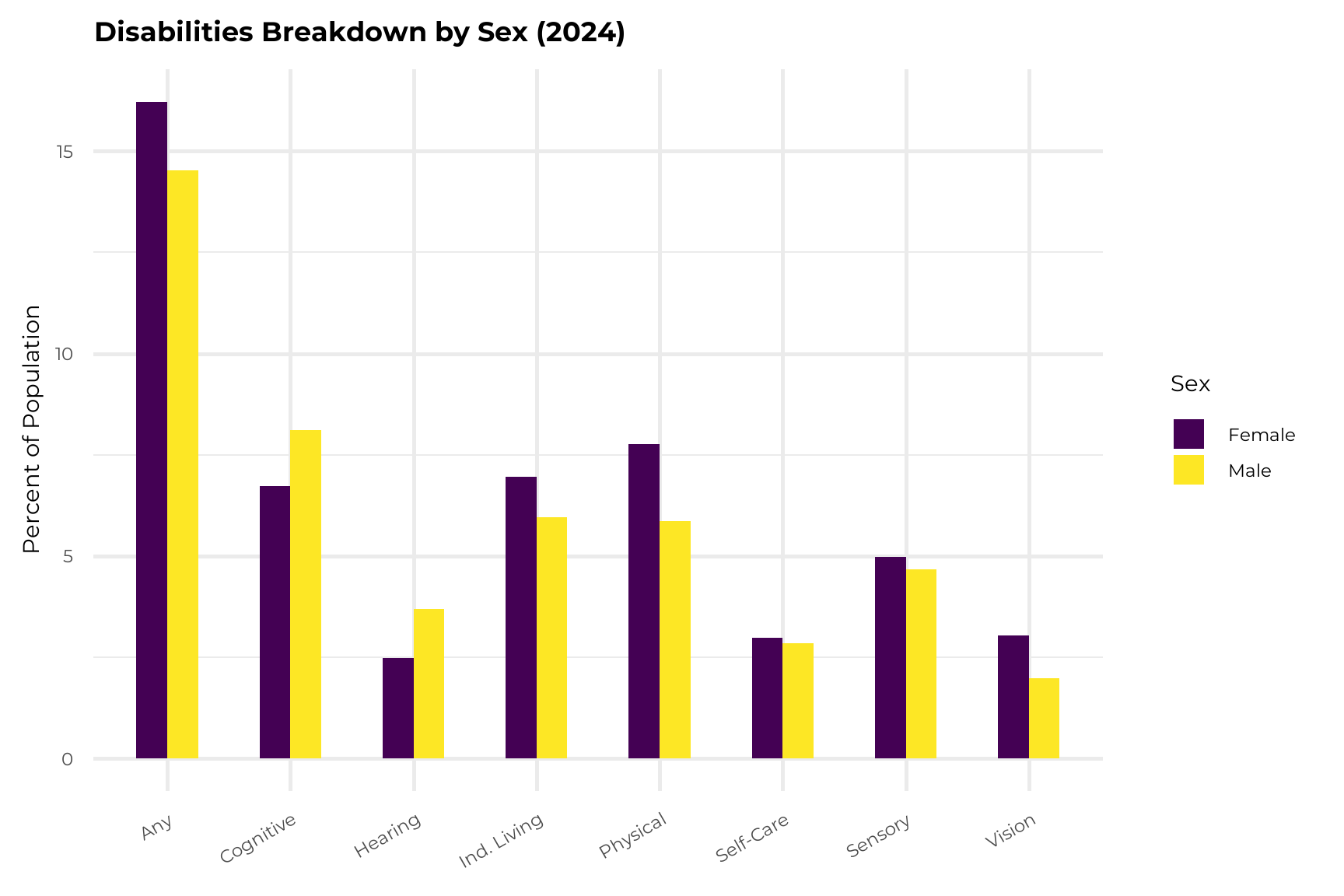
Sex
Race
Own vs. Rent
Individual
Household
Income
Individual
Household
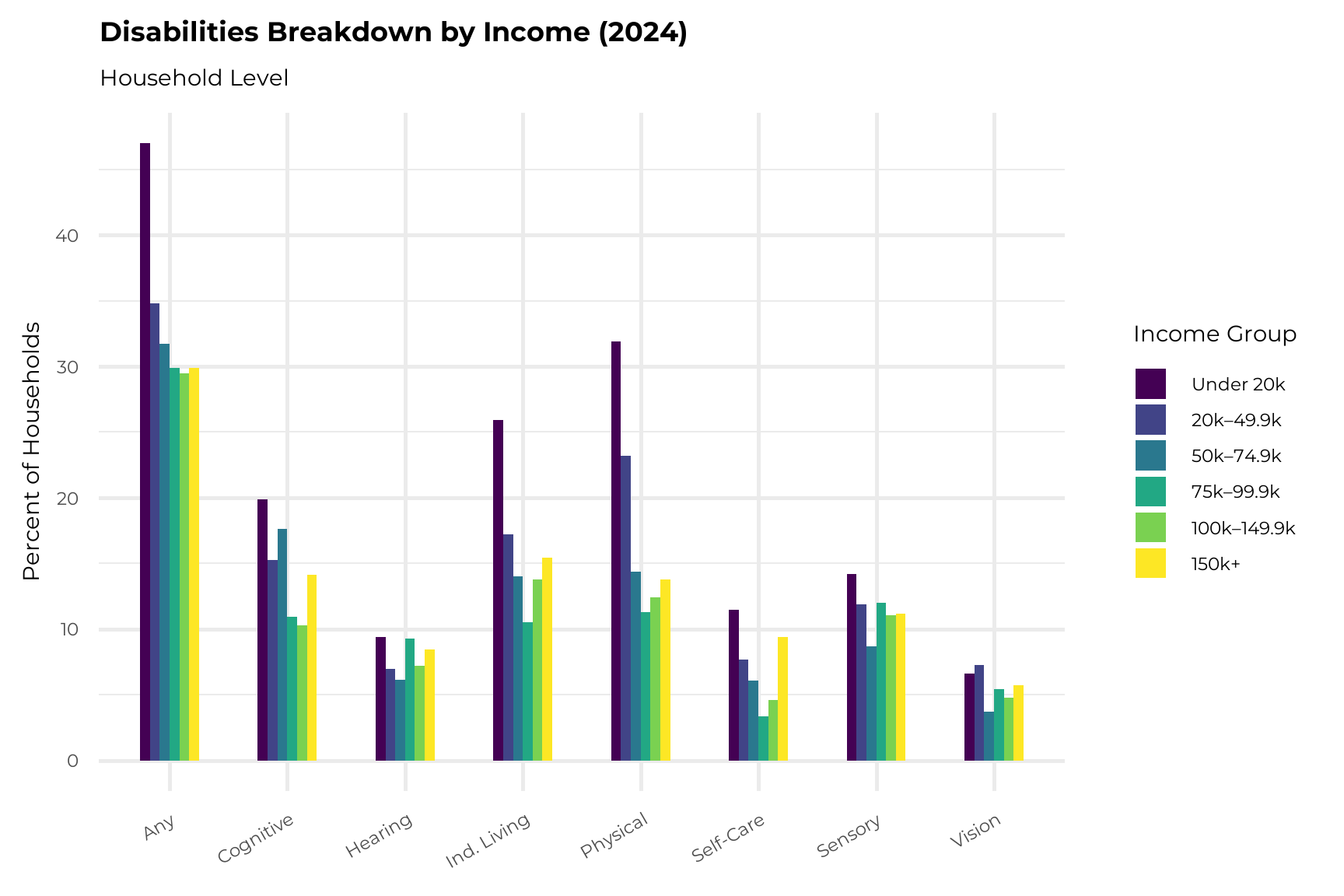
Age
All Ages
Older Subset
Map
## <environment: R_GlobalEnv>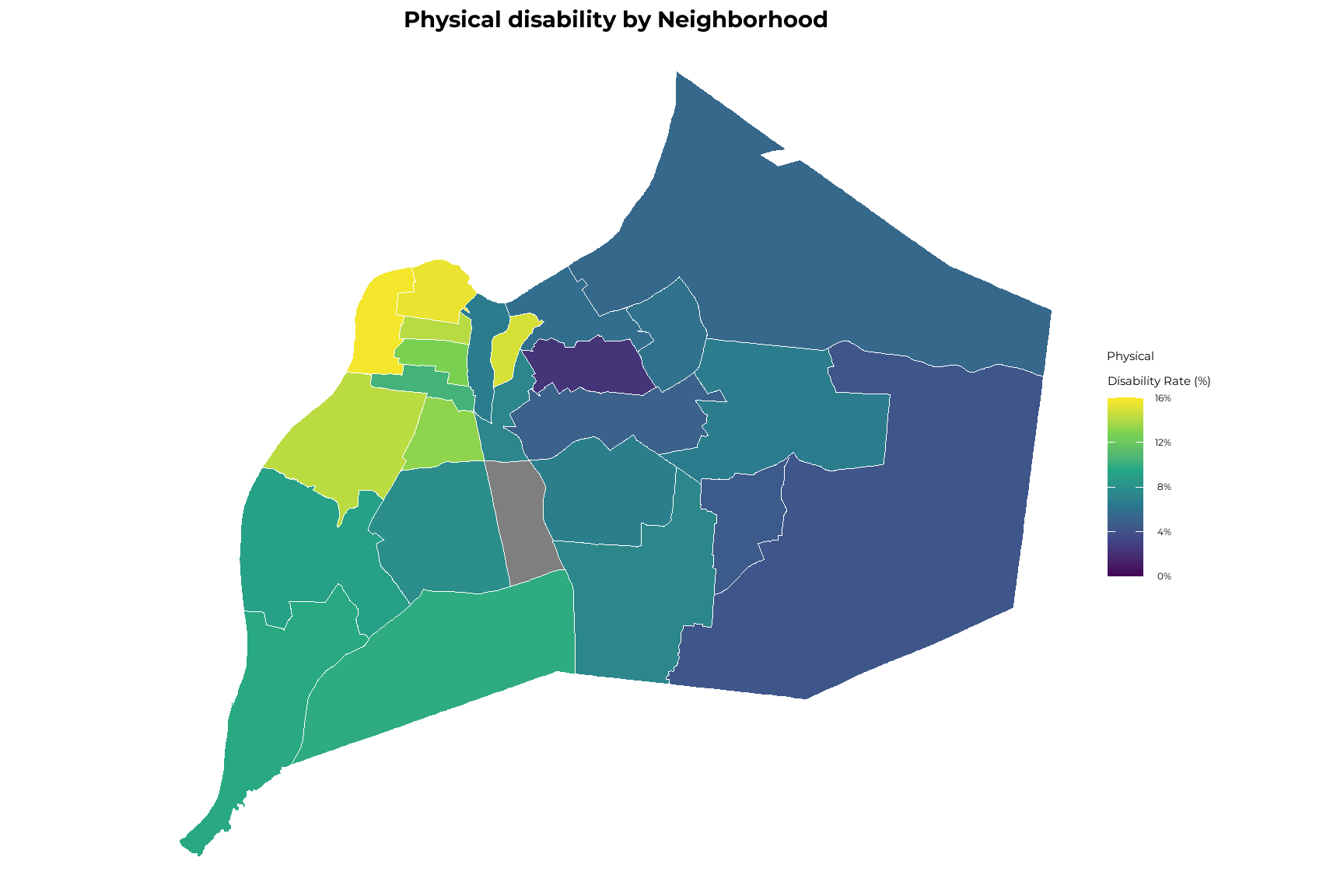
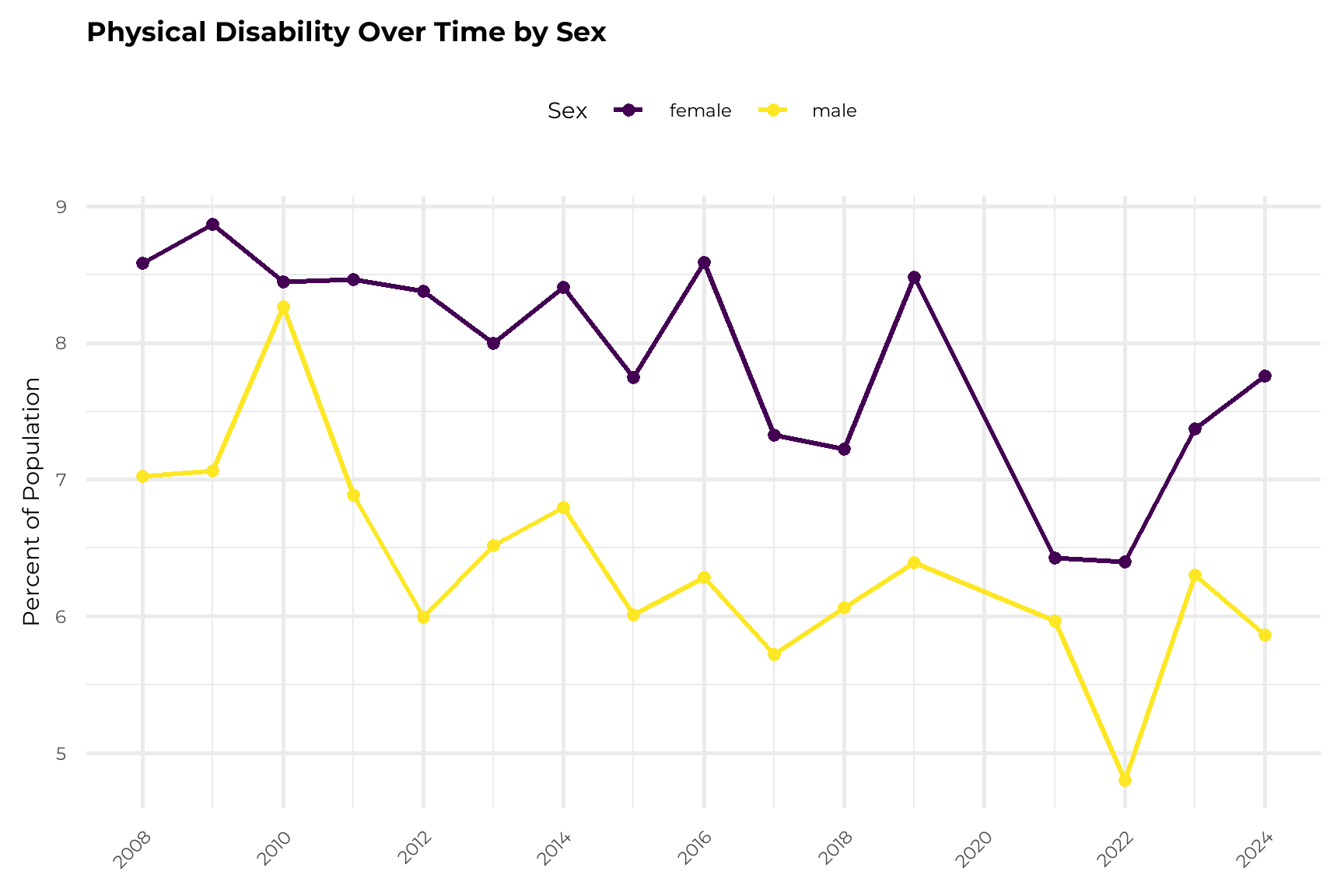
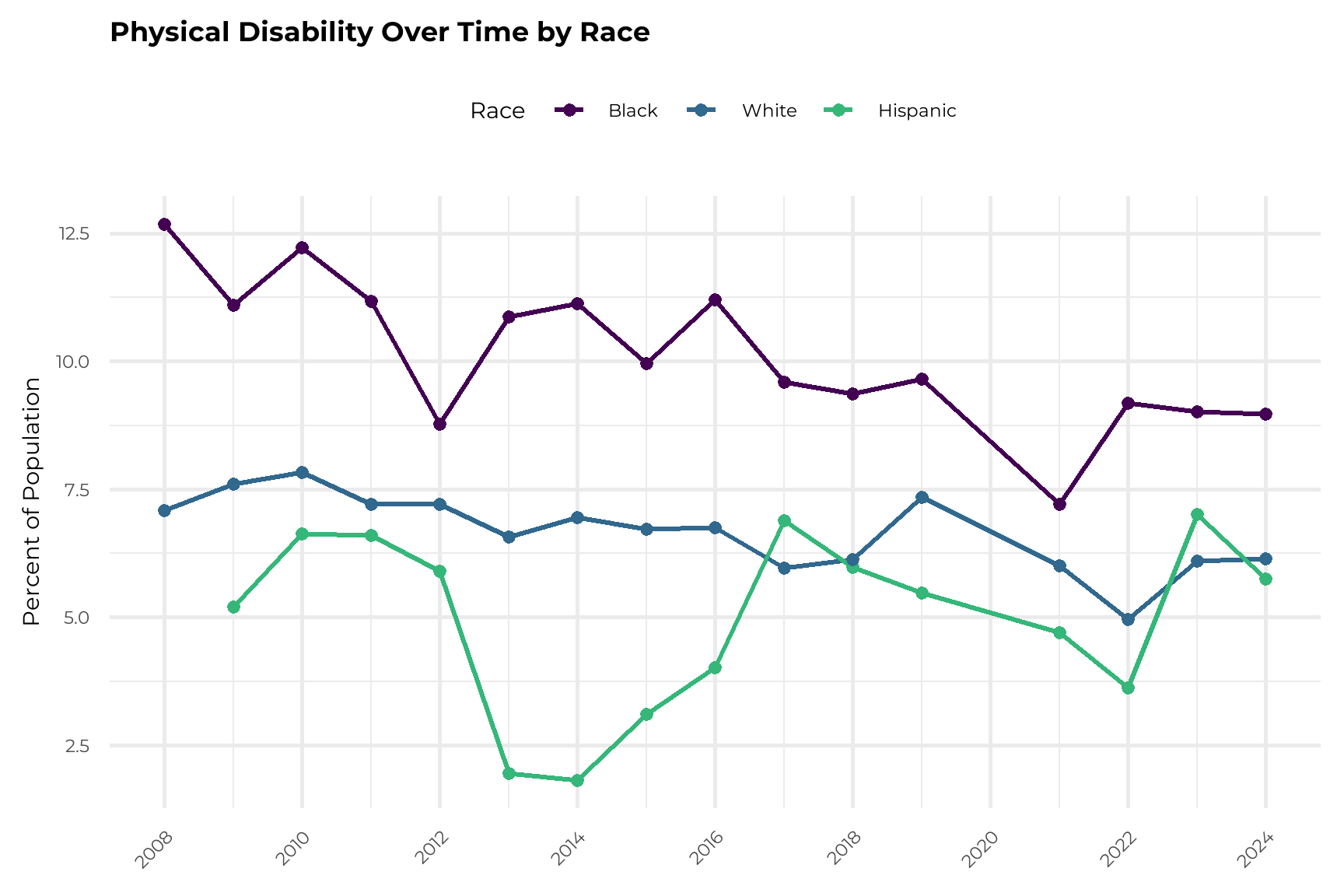
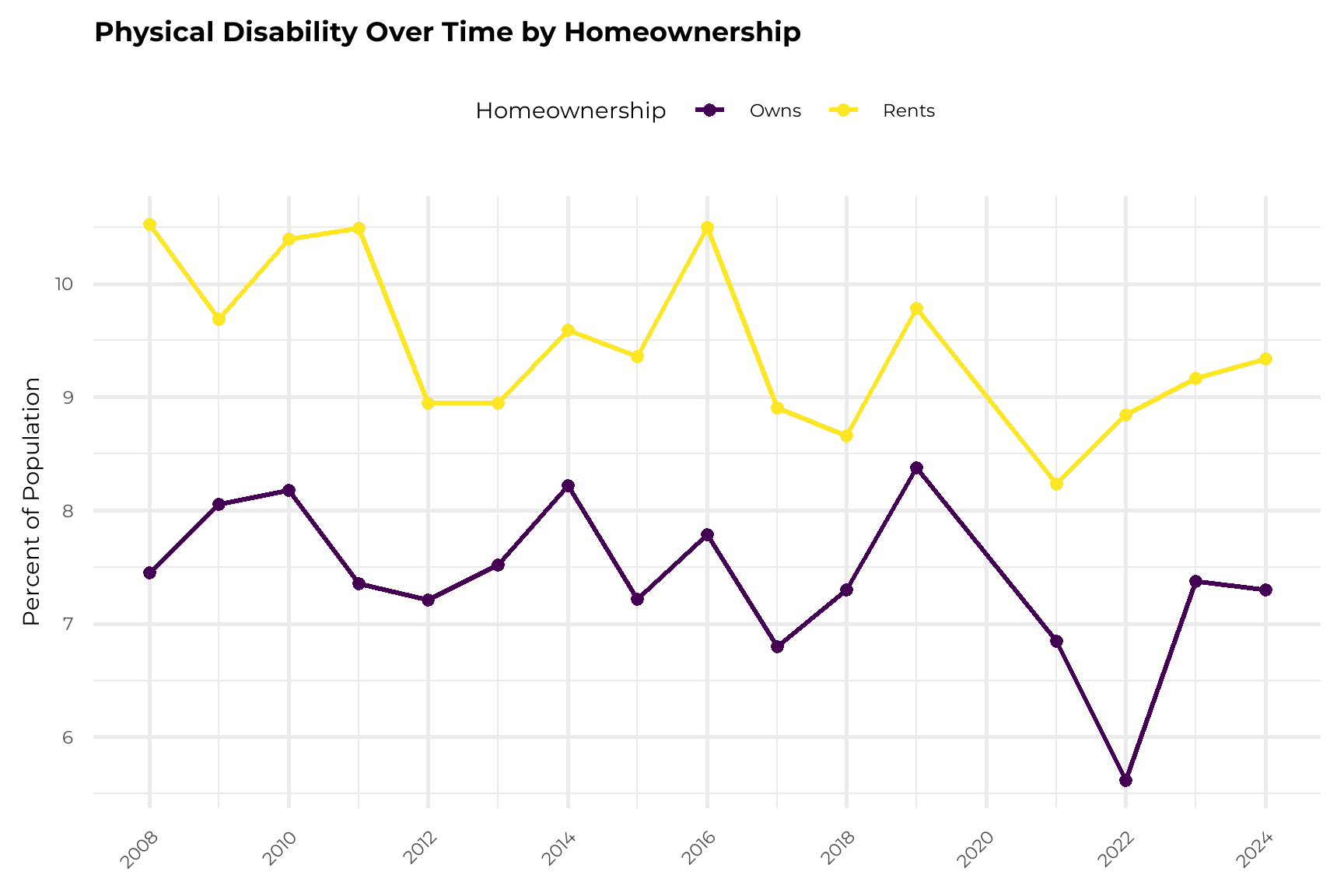
Trends Over Time (2008-2024)
Note missing data for the year 2020
Overall
Sex
Race
Own Vs Rent
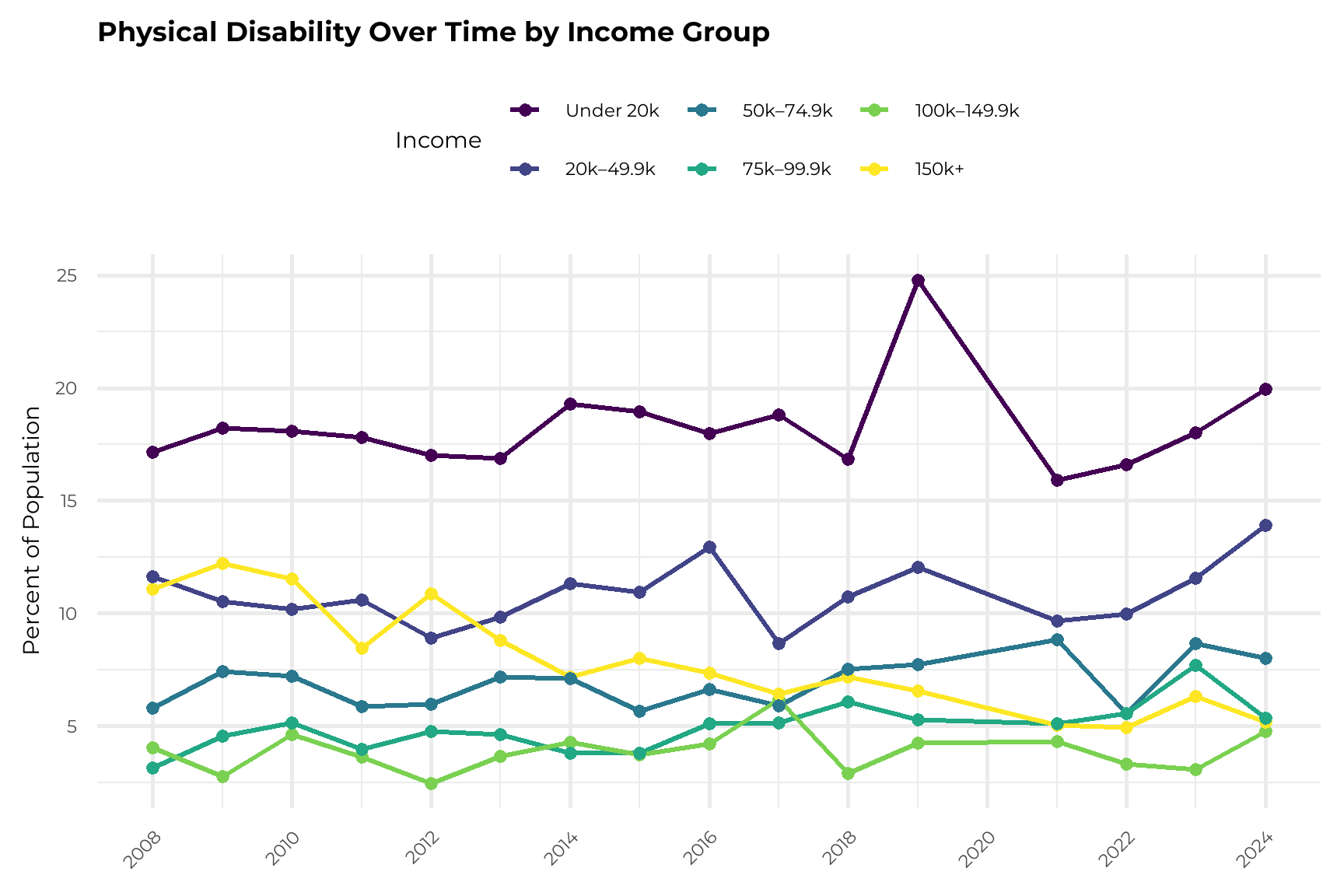
Income
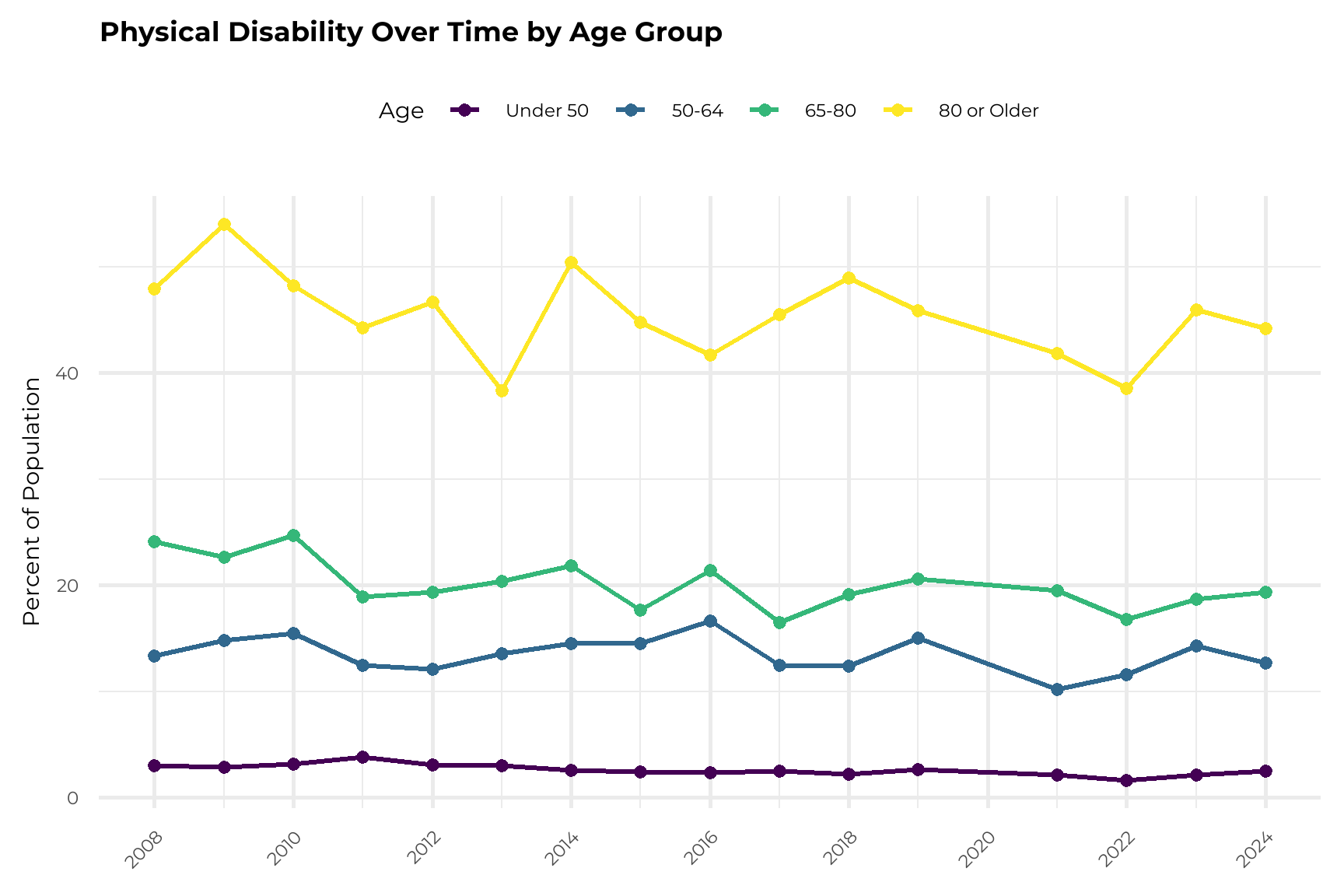
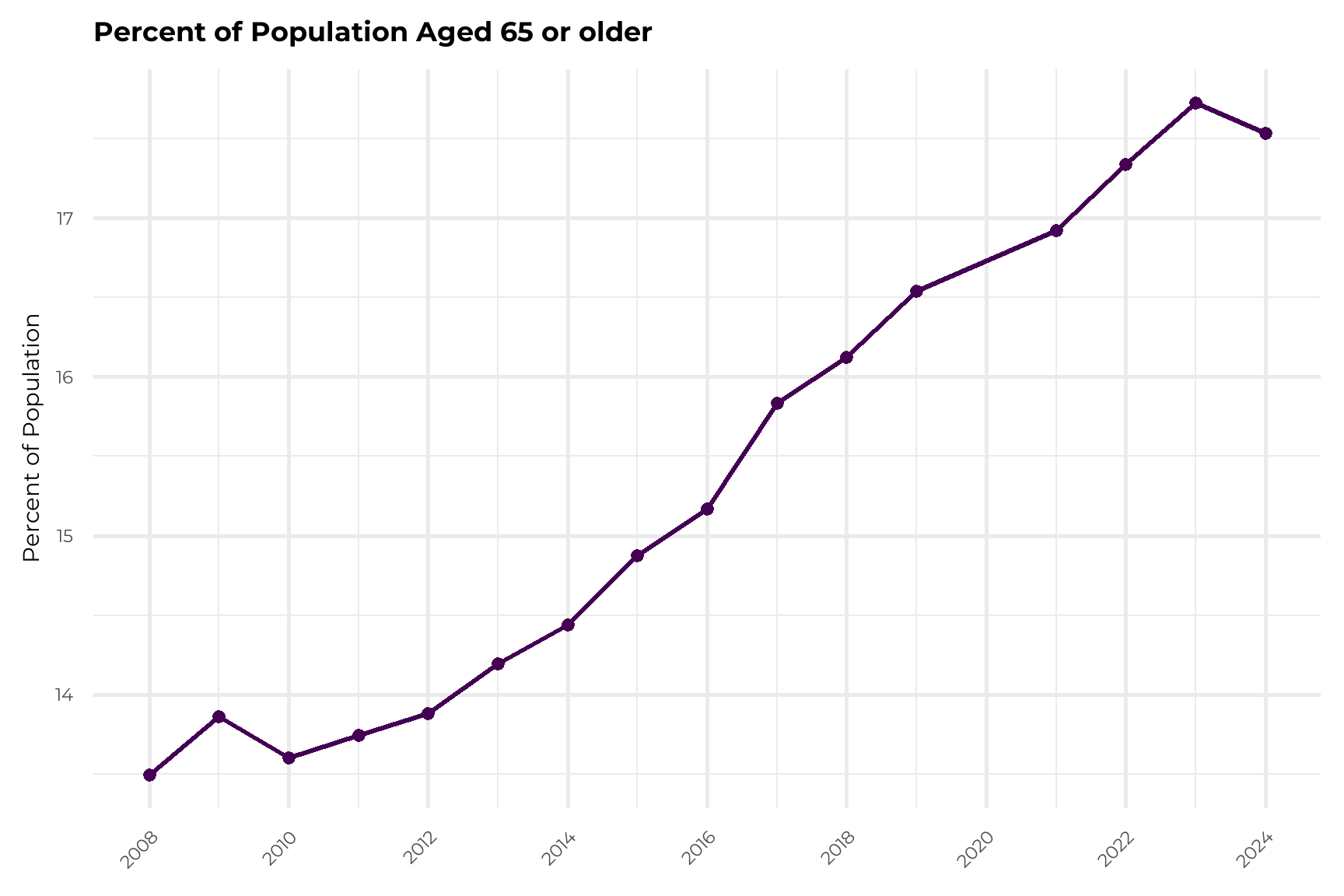
Age
Kentucky Housing Corporation (KHC)
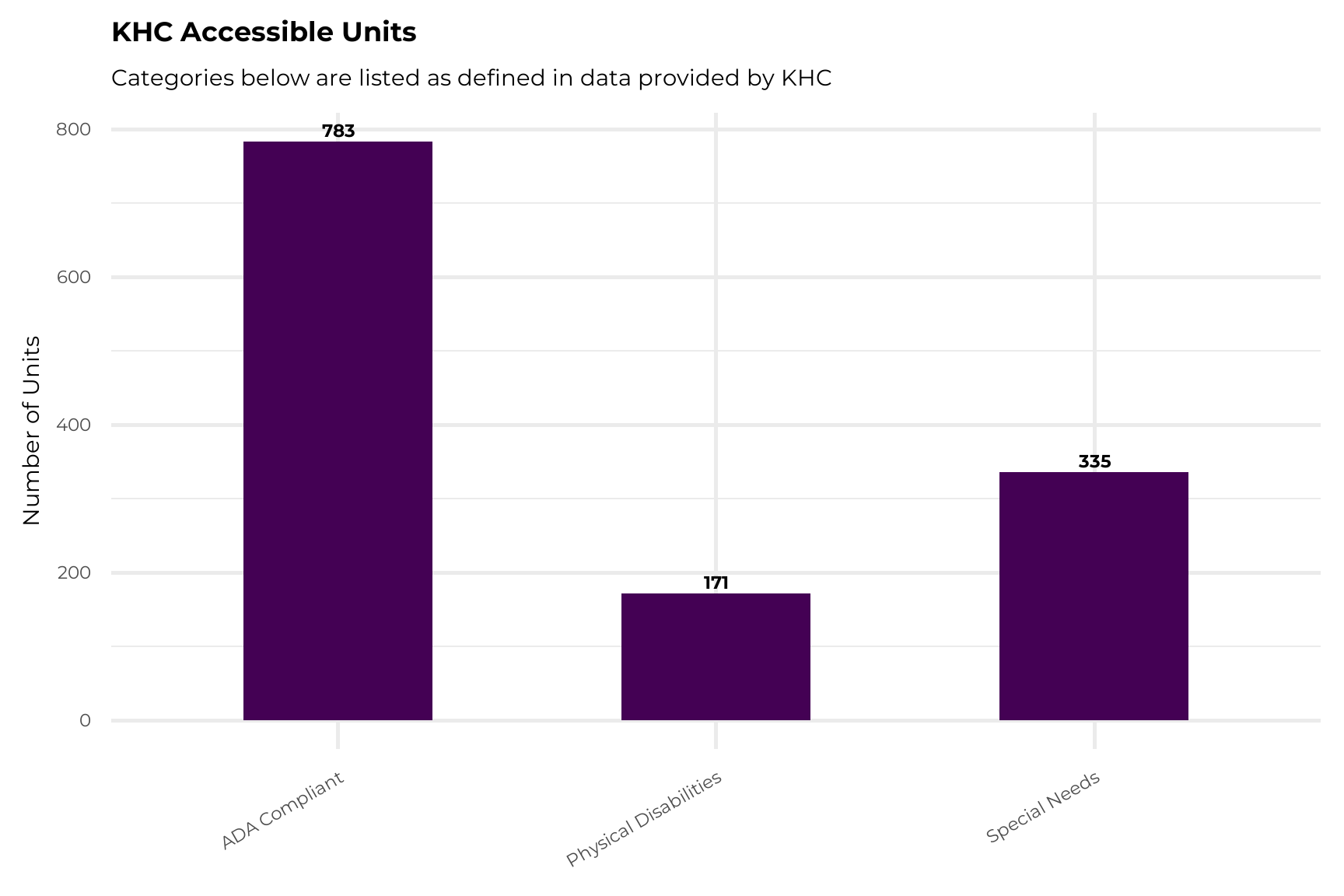
Below is a graph showing the number of accessible units in various housing developments provided by KHC. The total number of housing units in the data set was 35,862, making the largest category of accessible units (all categories combined) about 3.59% of units. Note: The differences in unit features based on categories ADA compliant, Physical Disabilities, and Special Needs have not yet been defined.
Projections: Jefferson County
Age
Ambulatory Difficulty
American Housing Survey (AHS)
Household Level Accessibility Estimates
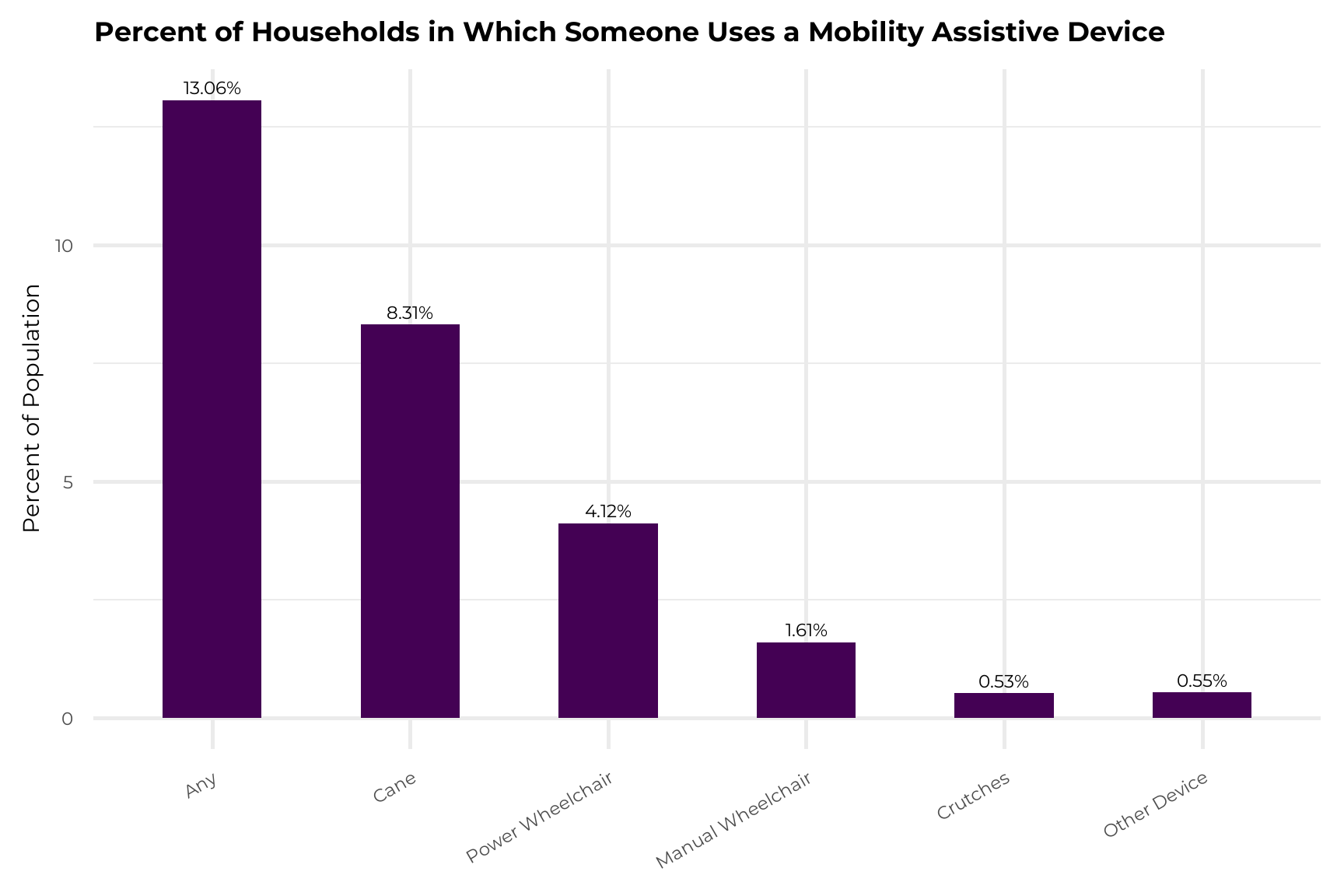
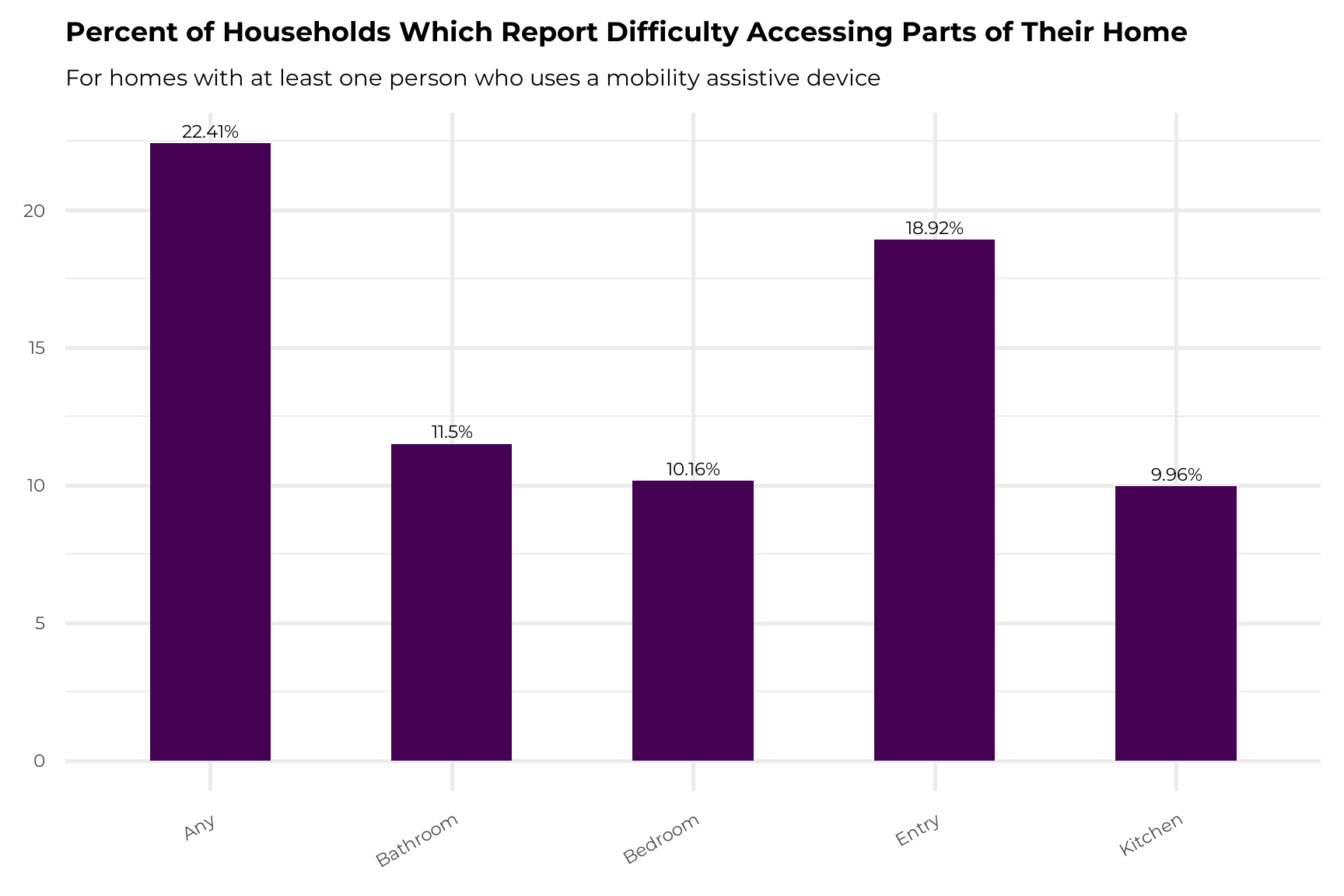
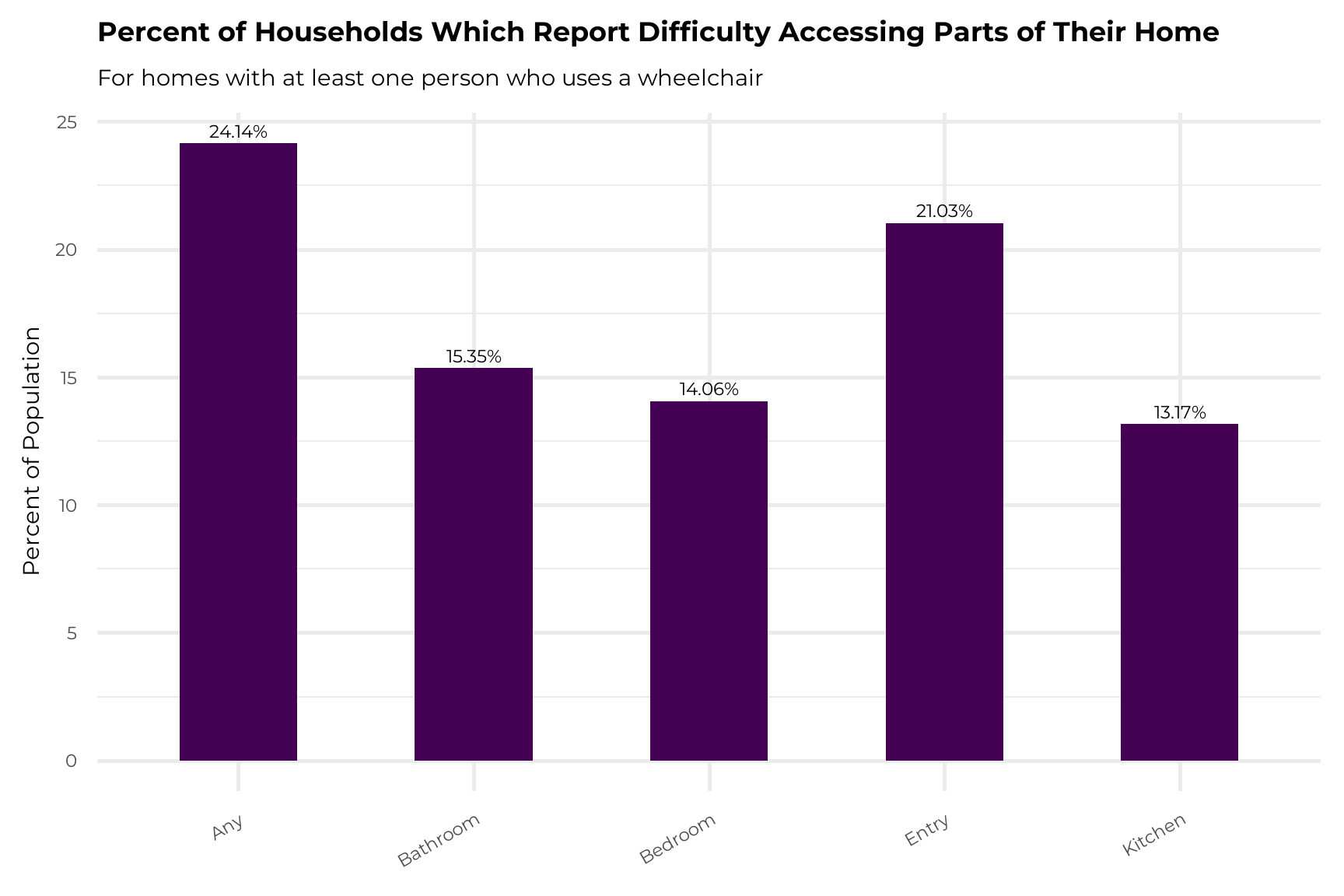
For Jefferson County, the number of households that include at least one person who uses any mobility assistive device is estimated to be 43,517, and around 18,031 include at least one person with either a manual or powered wheelchair.
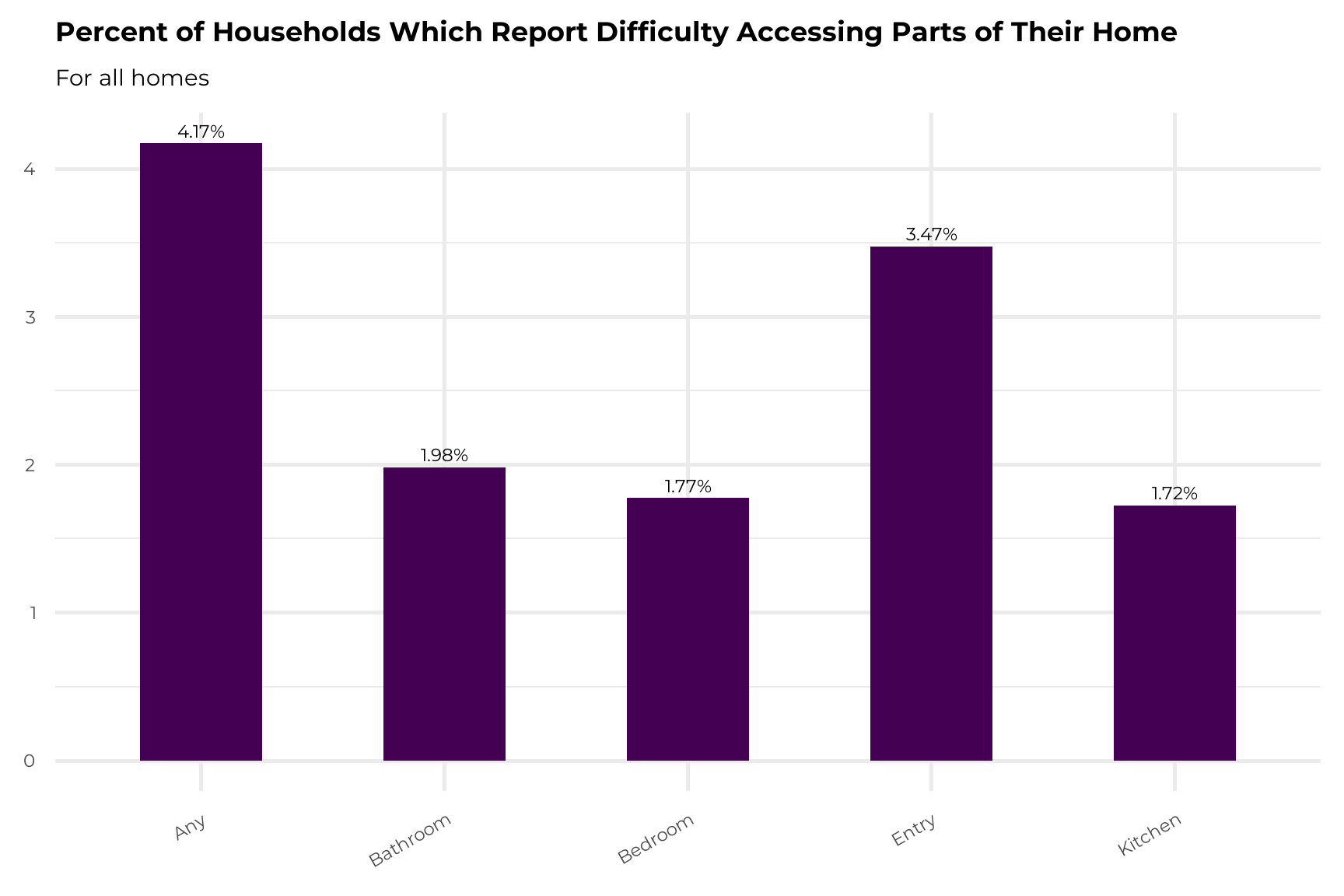
Accessing Areas of the Home
Households Including a Person Who Uses a Mobility Assistive Device
Households Including a Person Who Uses a Wheelchair
All Households